
Venice: Julia Marchand

Julia Marchand in Venezia. Portrait by Matteo de Mayda
Julia Marchand is a French, Venice-based curator of the Georgian pavilion for the 60th edition of La Biennale di Venezia, founder of Extramentale, lecturer, and writer.
This year marks a decade since Marchand founded Extramentale to “develop an understanding of reality and contemporary creation through the prism of adolescence.” To honour this milestone and coincide with the closure of the platform, Lenz Press has published her book I Am The F****** Subject, Art And Adolescence. Marchand has also curated the group exhibition Adolescence, with Joanna Kordjak and Katarzyna Kołodziej-Podsiadło, at Zacheta National Gallery in Warsaw, on view until 20 September 2026.
Marchand’s curatorial focus for the Georgian pavilion, 2024 was Ilia Zdanevich (Tbilisi 1894 – Paris 1975), an artist, poet and scholar who worked under the pseudonym Iliazd, who was an active contributor to the Futurism and Dada movements. For the exhibition, titled The Art of Seeing — States of Astronomy at Palazzo Palumbo Fossati, Marchand invited contemporary artists to respond to 65 Maximiliana, a book by Max Ernst made in collaboration with Zdanevich in 1964, which was dedicated to Ernst Wilhelm Tempel (1821-1889), a prolific discoverer of comets, some of which he observed from Venice.

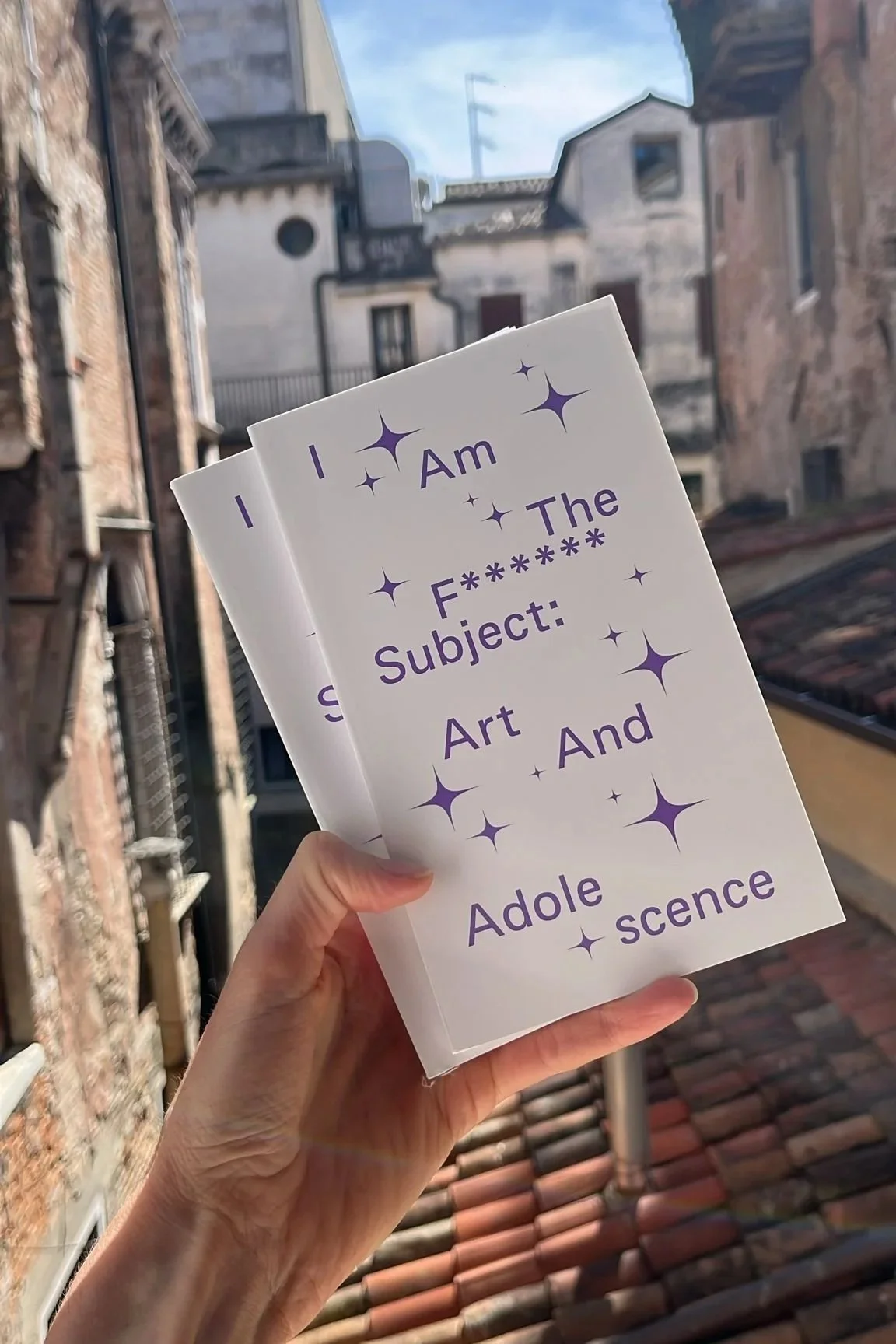

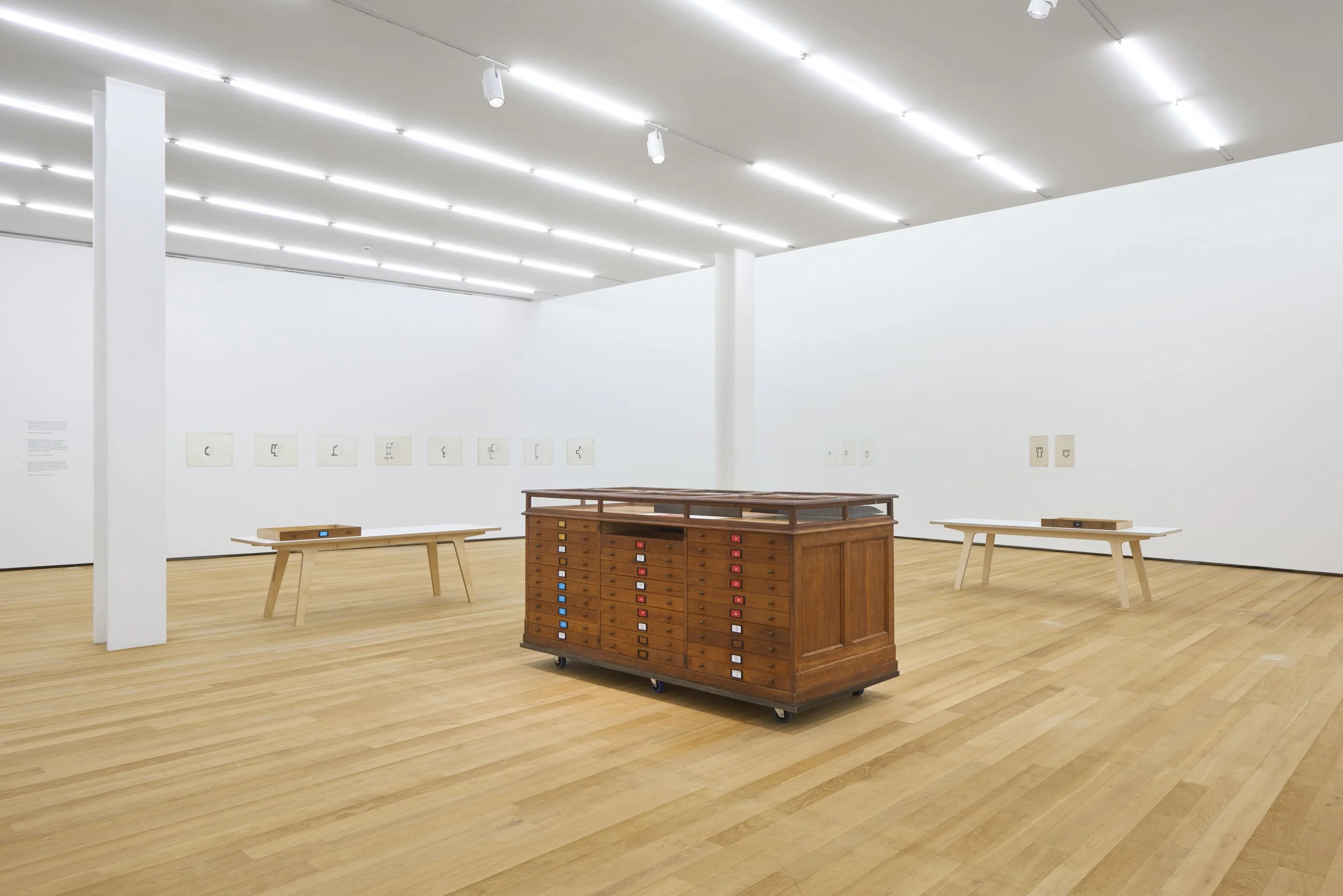
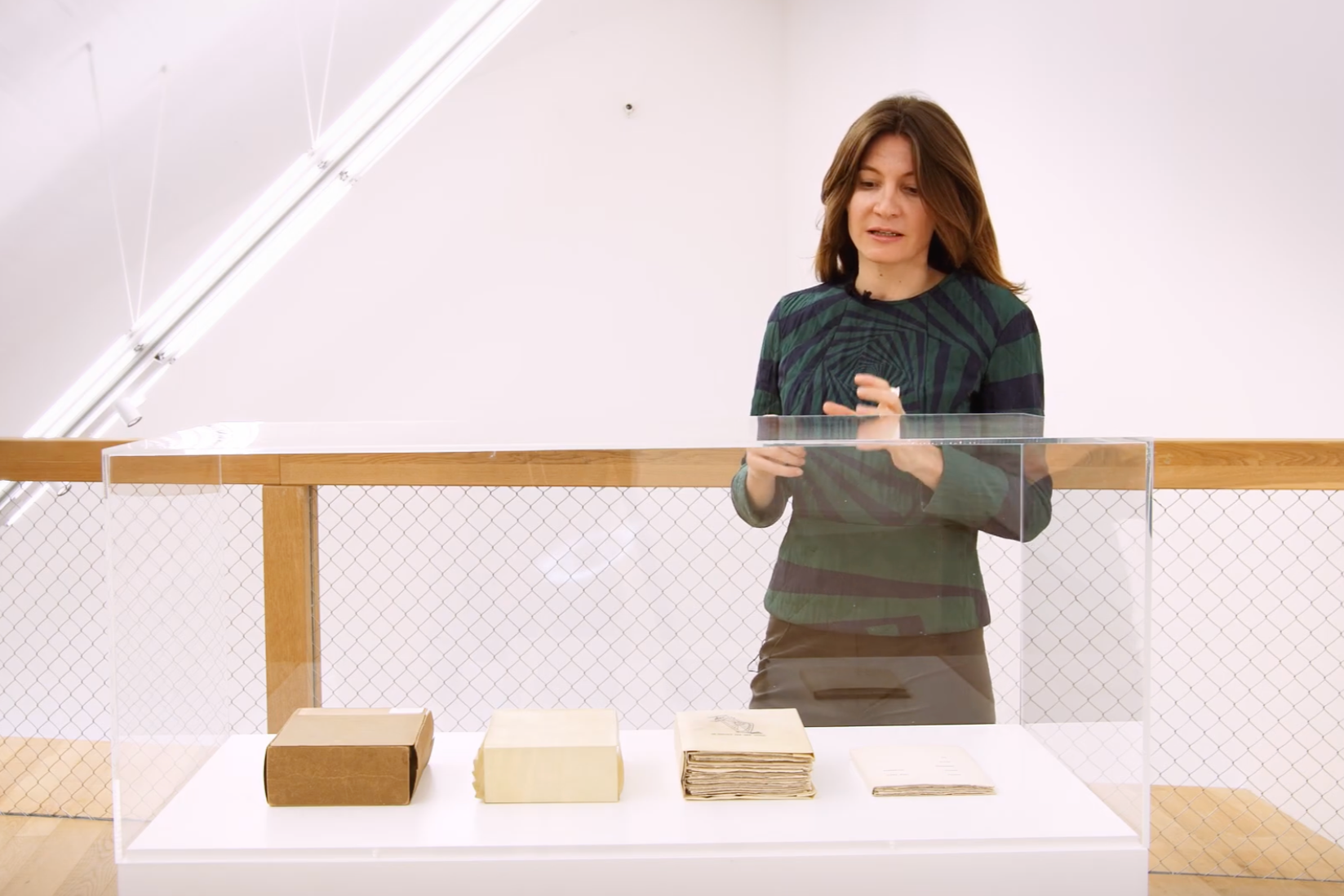
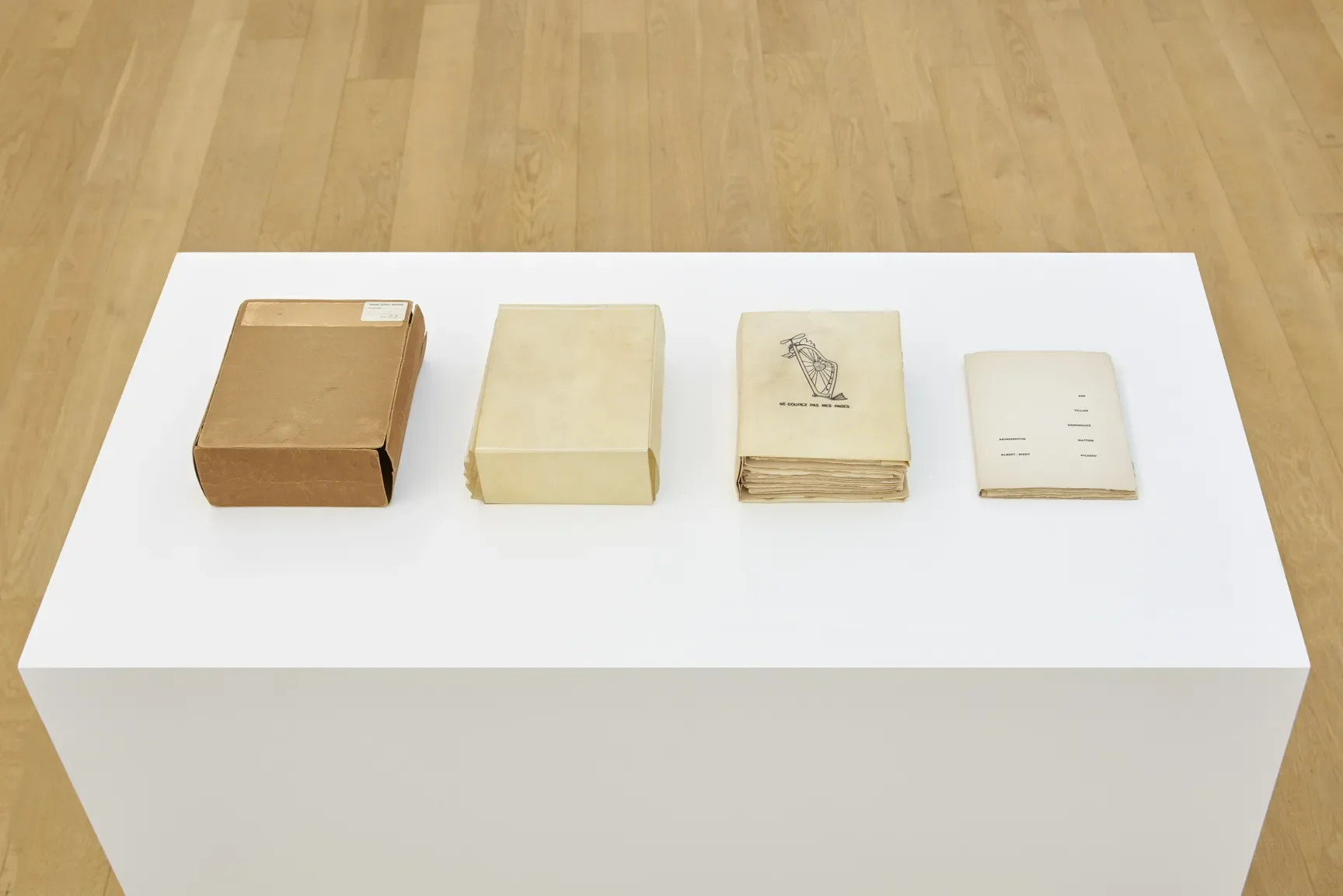
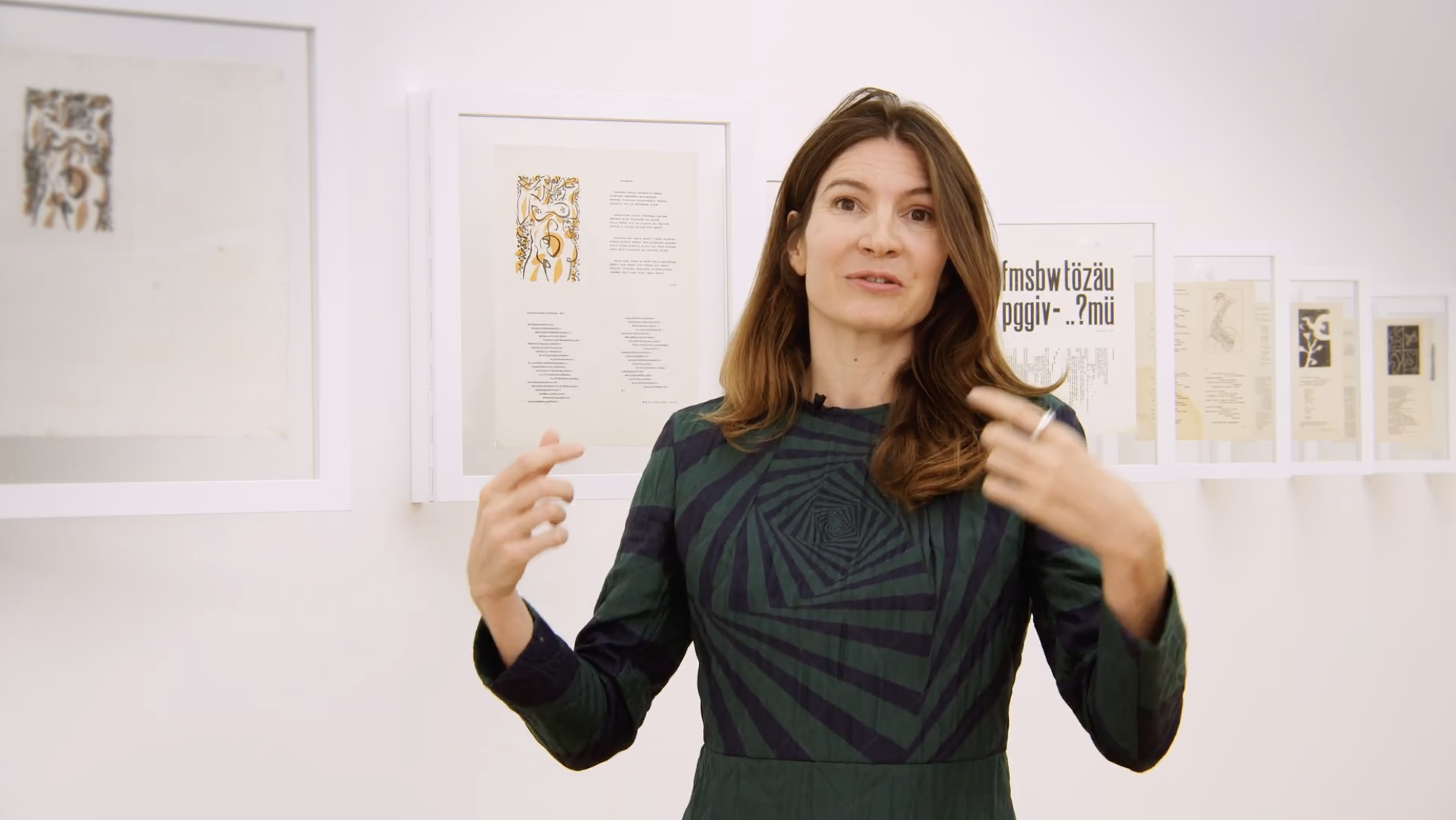


Image credits: (1) Aneta Grzeszykowska, from the series Daughter, 2025, pigment ink on cotton paper. Courtesy of the artist and Raster Gallery and Zacheta National Gallery, (2) I Am The F****** Subject, Art And Adolescence, (3) Portrait of Julia Marchand in TOUTITÉ ILIAZD The Study of Form, by Tiberio Sorvillo, (4) TOUTITÉ ILIAZD The Study of Form, Installation view by Jürgen Eheim, (5, 6, 7, 8) Poésie de mots inconnus by ILIAZD, (9) Tempel’s tempel by Juliette George and Rodrigue de Ferluc; installation of illustrated painted books by Nika Koplatadze (10) 65 Maximiliana or the Illegal Practice of Astronomy, 1964.
Continuing to introduce the work of Zdanevich, Marchand curated an exhibition of his works, together with Eva Brioschi, for the Fondazione Antonio Dalle Nogare, which will continue until 26 August 2026 in Bolzano. The exhibition, titled TOUTITÉ ILIAZD The Study of Form, is the largest Italian retrospective of Zdanevich to date, comprising his diverse oeuvre of forms that comprise intellectual and spatial interests. Zdanevich’s contribution to Marcel Duchamp’s concept for a portable museum – the Boîte-en-Valise series C (commissioned between 1954 and 1958) serves as a starting point to TOUTITÉ – understood in English as Everythingism.
In 2025, Marchand was the the rapporteur for Xie Lei in the Marcel Duchamp Prize, and curated a site specific exhibition of Liselor Perez, for the fifth edition of the Rubis Mécénat Prize in partnership with Beaux-Arts de Paris, that ran from 3 October to 30 November 2025 at the Saint-Eustache Church in Paris. Previously, during her tenure as curator for the Fondation Vincent van Gogh Arles between 2015–2023, Marchand, together with Bice Curiger, curated Action, Gesture, Paint Women Artists And Global Abstraction, an expansive survey of 70 international female artists associated with the expanded scope of Abstract Expressionism, which later toured to Whitechapel Gallery in London and the Kunsthalle Bielefeld, in Germany, among numerous other exhibitions.
For Marchand’s guide to Venice, ahead of the press days for the 61st Venice Biennale from 6 – 8 May 2026, we are curious to see how her interests in the “carnivalesque and adolescent aesthetics within visual arts” play into her recommendations…
☉ Why have you chosen to call Venice home?
Venice is a place where you belong to a community, a sense of joy, where serendipity takes you throughout your day. You never feel alone in Venice: the city loves you back as well as its community. Besides, we, venetians, also spend time on the islands. Venice is not the only home to our hearts.
☉ What are your top three places in Venice, and how are they special?
Ca’ Rezzonico, the 18th century Venetian museum and its Tiepolo paintings upstairs in a small apartment. La Nuova Speranza space in Castello: it hosts events such as the dinners by TOCIA! It is not a secret for those who live in the city but totally out of the radar [found on Campo Ruga, Castello 145] and Società Bocciofila San Sebastiano: a member club for those who play the Venetian pétanque!
☉ Finally, where might we escape from the carnival that is the Biennale?
The beaches of Lido and Pellestrina, a narrow island north of Lido – but reaching it requires a bit of time! Also the district of Santa Marta in Venice, which offers a relaxed local vibe, with bars, cafes, restaurants and open spaces near the university.
