
Basel: Hamza Badran
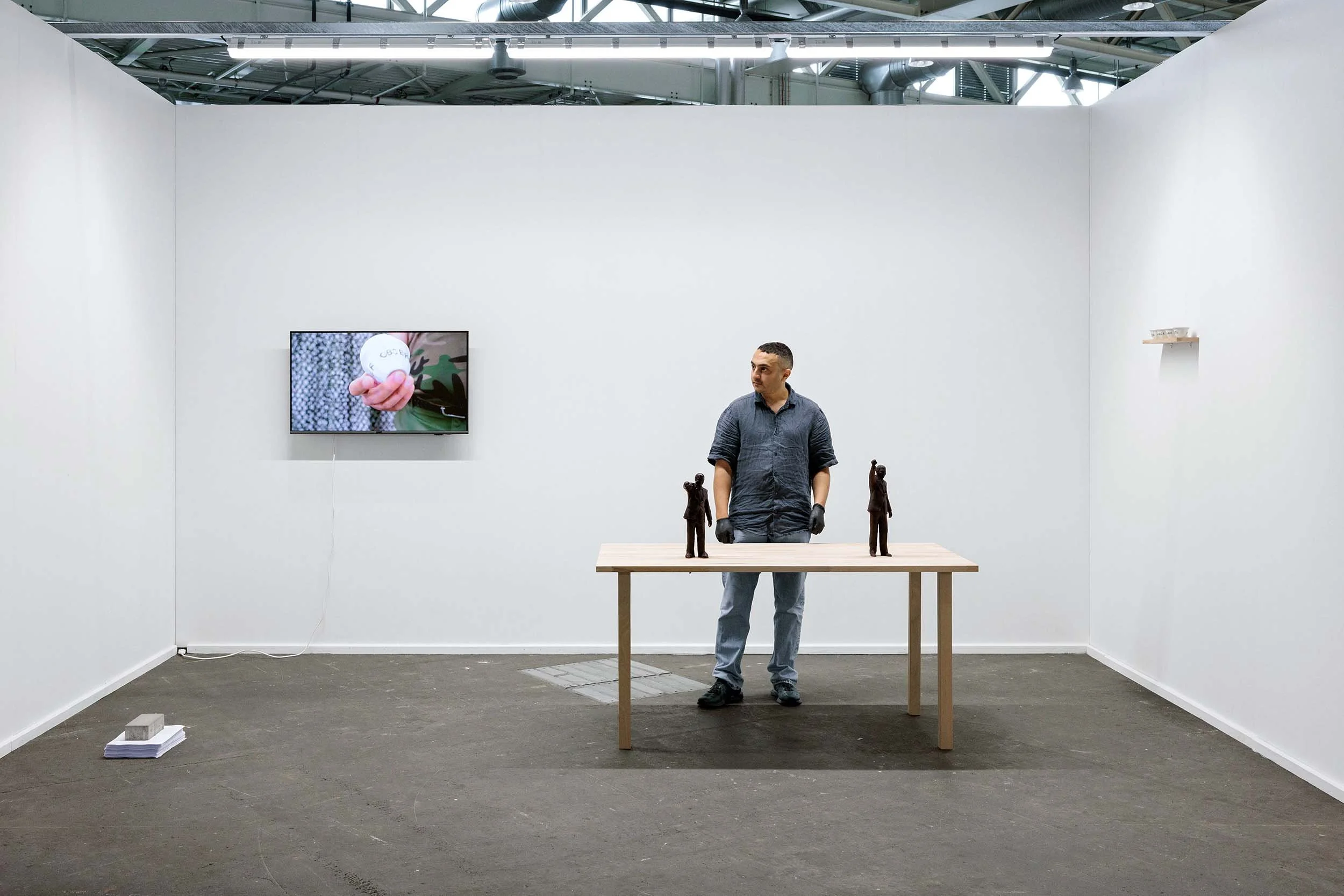
Hamza Badran with his presentation at the Swiss Art Awards, 2026. Image: Gina Folly, BAK
Hamza Badran (1993, Nablus) is an interdisciplinary artist based in Basel since 2018, and a current resident at the prestigious Rijksakademie in Amsterdam.
To inaugurate Basel Art Week, 15 – 21 June 2026, Badran was announced as winner of the 2026 Swiss Art Prize, making him the first ever Palestinian artist to win the Federal Award.
Badran’s conceptual practice draws on personal narratives and experiences to question historical and ongoing national power dynamics. For the 2026 Swiss Art Awards Badran drew on his experience witnessing the unveiling of the statue of Nelson Mandela in Al-Tireh, in the West Bank of Palestine. The 6-meter-high, 2-ton bronze monument was a gift from the city of Johannesburg. Badran noted that within the wealthy neighbourhood it stands, the statue salutes towards Jordan, rather than Palestinian land.
Freedom Molasses, is the artist’s domestic-scale replica of this iconic Mandela statue, composed of date paste, an important ingredient for making Palestinian sweets, and symbol of hospitality. At unplanned moments throughout the exhibition, Badran served fragments of these sculptures to visitors. This action references a pre-Islamic Arab practice of crafting gods from date paste, that are consumed in times of scarcity. Other works in the presentation include Observer Member, a 20-minute video work of Badran clicking two handmade coffee cups, an Arab custom to signifying coffee is ready, and a display of the cups themselves titled Non-Member Observer State, the official designation of Palestine within the UN Membership.
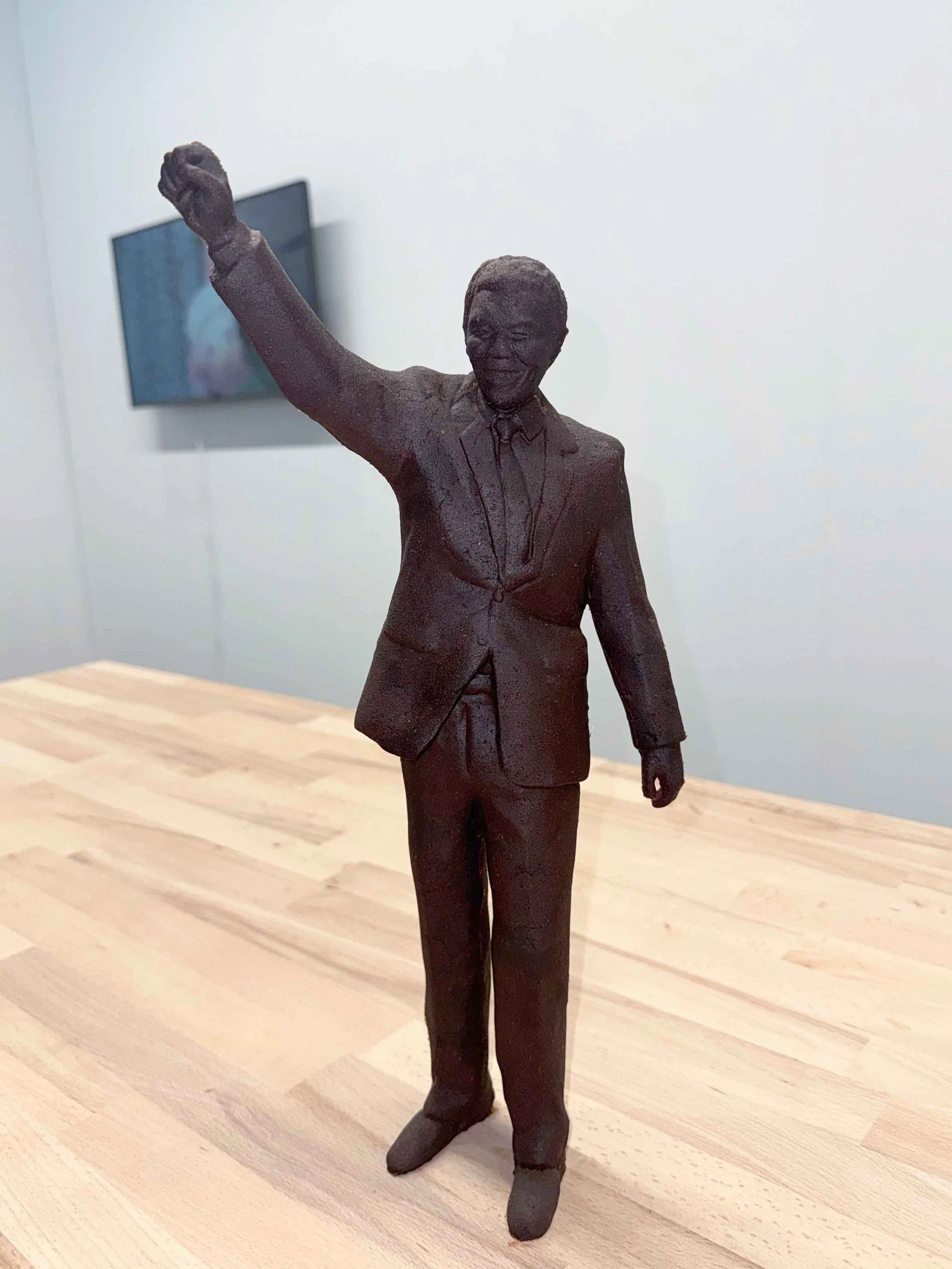
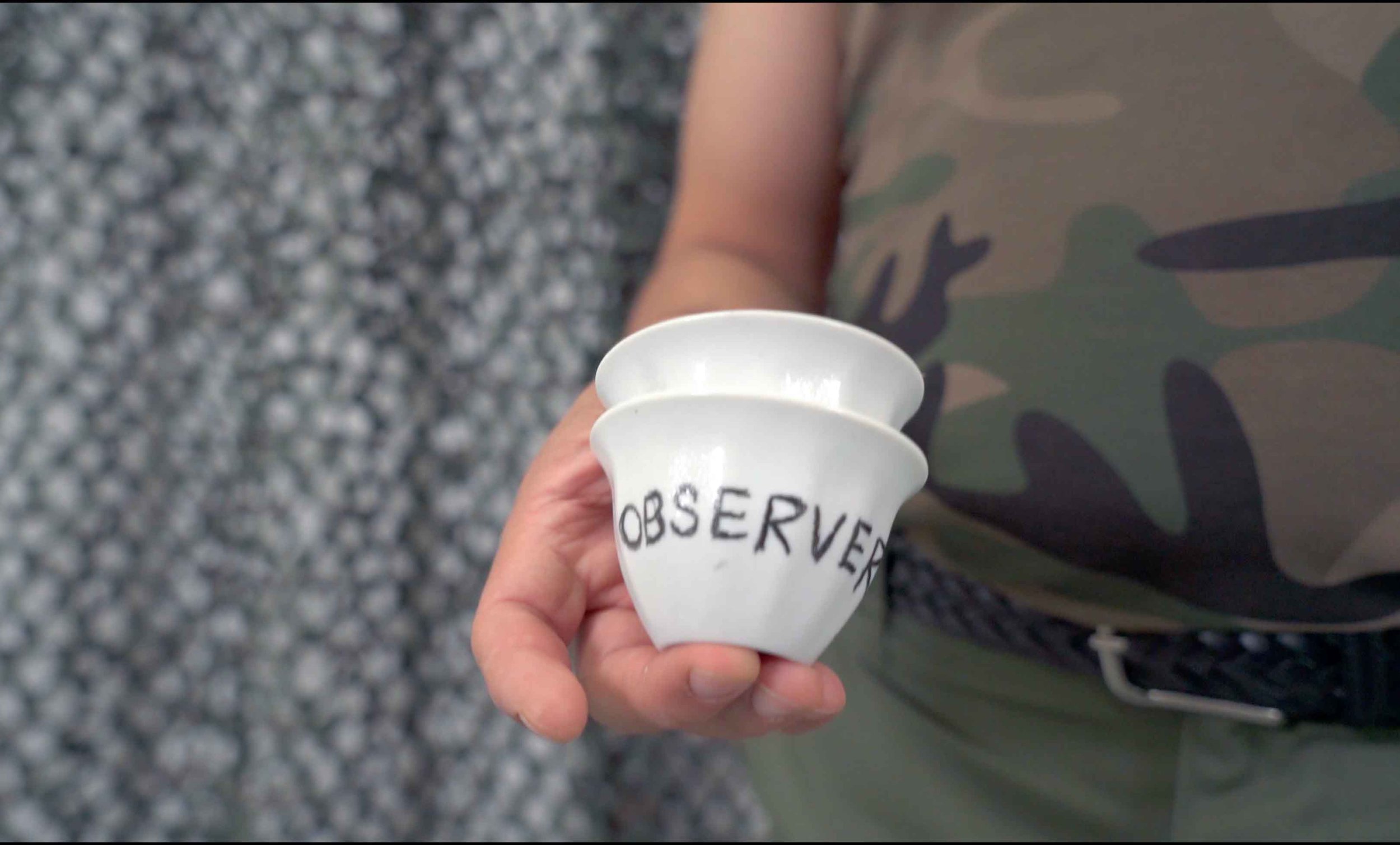
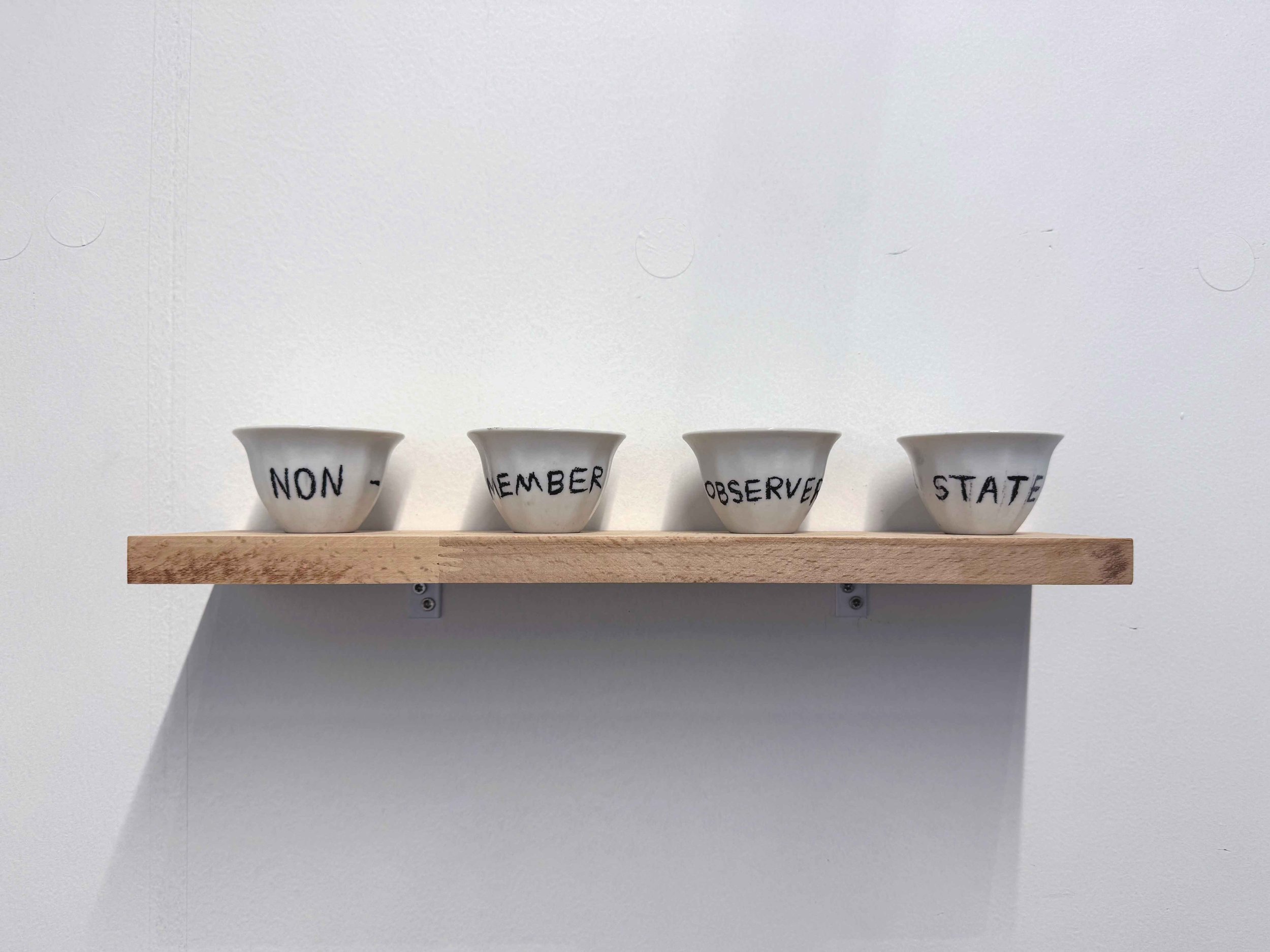
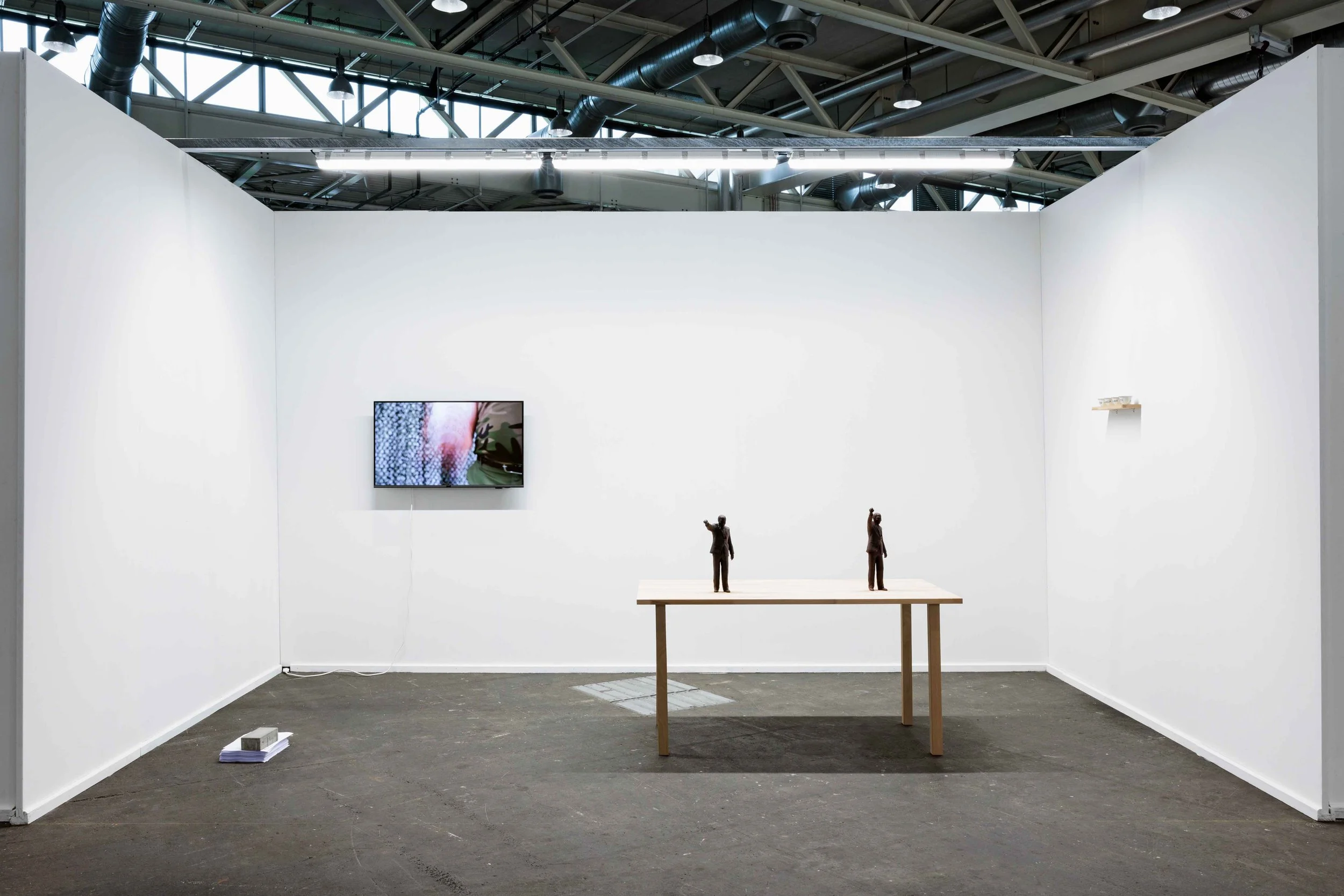
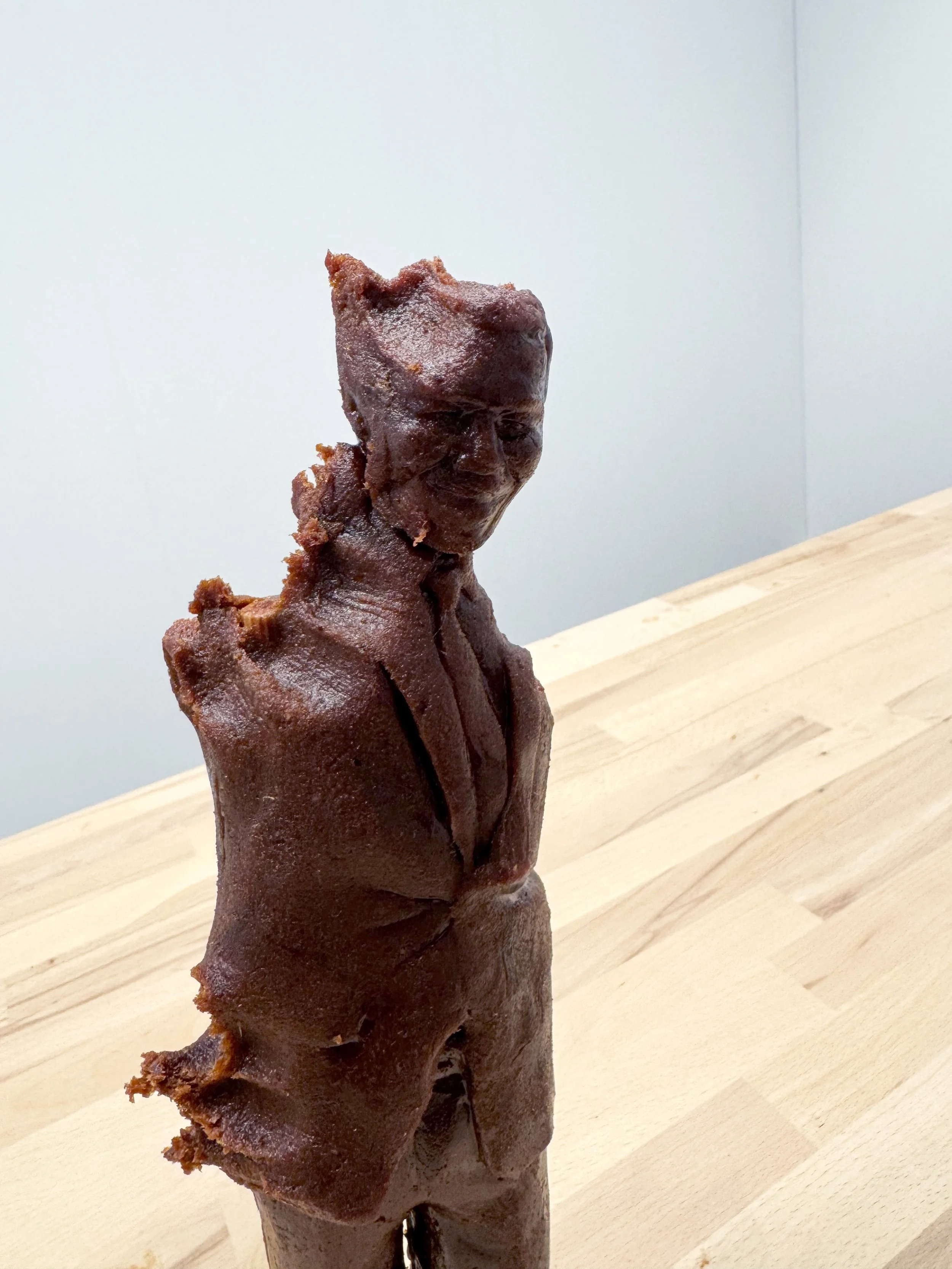
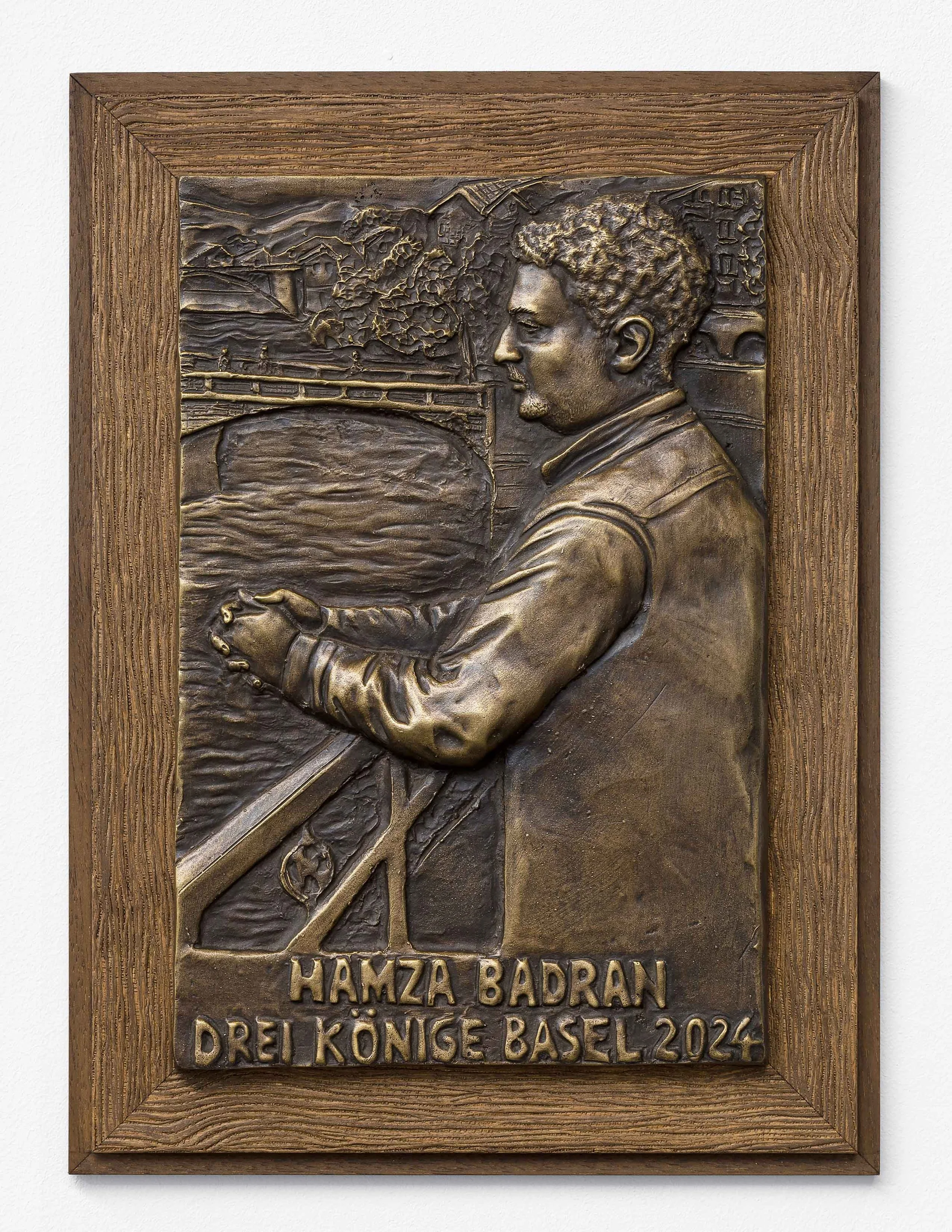
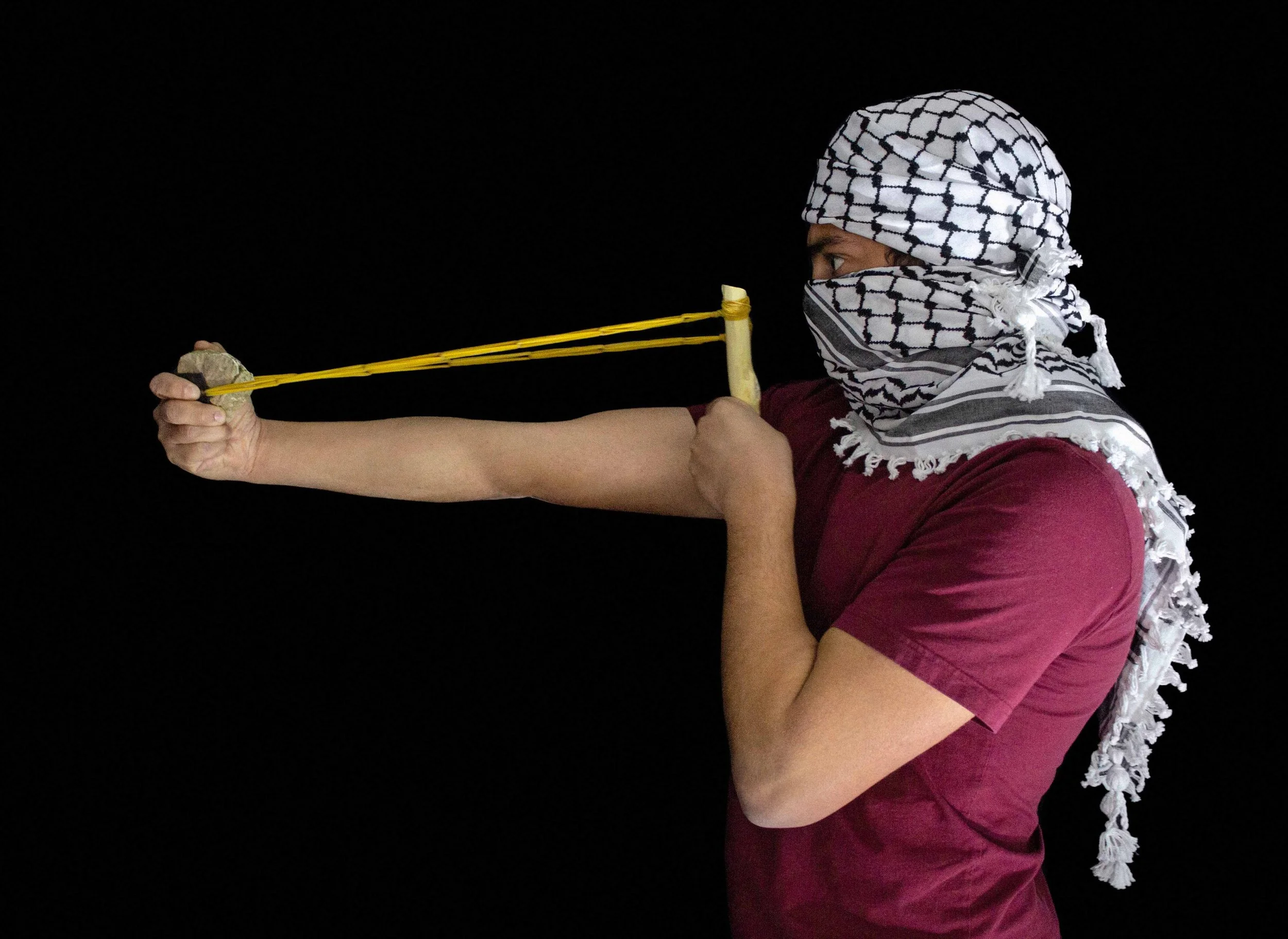
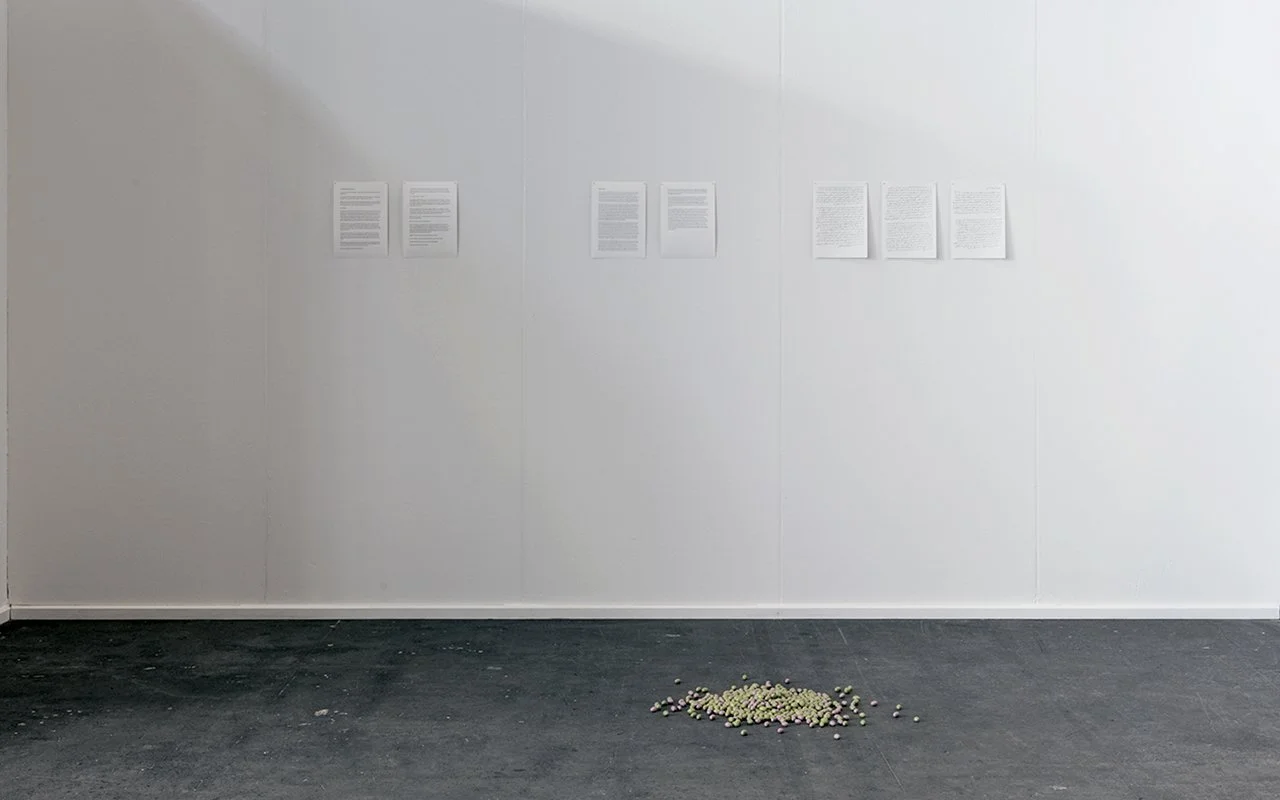
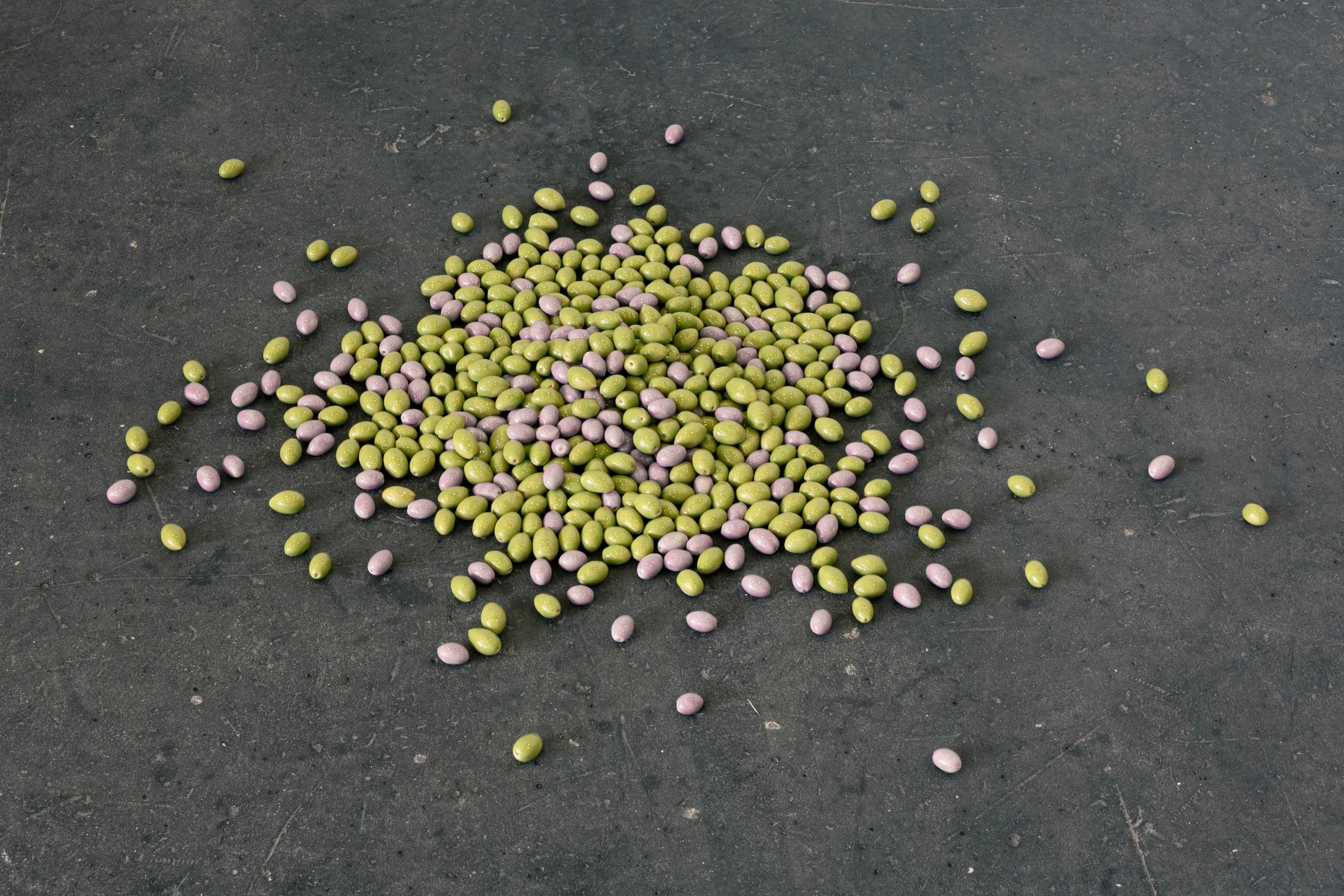
Image credits: (1, 2, 3) Hamza Badran, Freedom Molasses; Observer Member (screenshot); and Non-Member Observer State, at the Swiss Art Awards, 2026 (4, 5) Hamza Badran, Swiss Art Awards, 2026. Images: Gina Folly, BAK (6) Hamza Badran, Basel's Pride, 2024. Image: Allesio Belloni (7) Hamza Badran, Untitled (self-portrait), 2019. Courtesy Gian Marco Casini Gallery (8, 9) I am not Afraid of Nostalgia, 2023 (Ceramic handmade olives) Photograph courtesy of BAK/OFC and Gina Folly.
In 2024, Badran made an exhibition about the historic relationship between Palestine and Switzerland. Basel was the site of the first Zionist congress in 1897, for the occasion the congress’ convener Theodor Herzl stayed at the famous Grand Hôtel Les Trois Rois. The hotel has since named the room after him, and mentions the dates as of historical significance, attracting many wealthy Zionist visitors. Badran rented the River Room Herzl for his project, which the website claims to offer “inspiration and peace.” Inspired by the bronze portrait of Herzl which hangs in the room and is sold as souvenirs where the Zionist congress was held, the artist reproduced a similar bronze plaque with his own image.
In 2023, Badran won the Kiefer Hablitzel Göhner Art Prize, and in 2022, he was included in documenta fifteen as part of the collective Jimmie Durham and a Stick in the Forest by the Side of the Road. He received his Master's degree in Fine Arts from the Institute Art Gender Nature Basel in 2020 and his Bachelor's degree in Contemporary Visual Arts from the International Academy of Arts Palestine by Oslo National Academy of the Arts in 2018.
We are grateful to learn his perspective on Basel where the international art event that occupies the third most populous Swiss city every June. Shokran Hamza!
☉ What are some of the things you like about Basel?
I like the size of the city. It's easy to walk or bike almost anywhere, and I find Basel visually beautiful. I especially enjoy walking along the Rhine, which is both beautiful and clean.
As an artist, I'm amazed by how much art the city offers despite its size. The number of museums and the quality of their collections are incredible. I enjoy visiting them and experiencing artworks from different eras and periods.
Basel has become a good place for me and my work. Over the years, I've built friendships with people who support me not only as an artist, but as a person. It truly feels like home.
☉ How would you describe the Swiss art scene?
In my view, the Swiss art scene is conservative and outdated. It remains focused on form, aesthetics, and the market. There is also a deep fear of taking political positions. Art is reduced to discussions of ecology and gender—important political issues, yet often stripped of their political urgency and turned into well-designed objects, talks, and lectures about economics or internal Western politics. Rarely does it confront colonialism, occupation, land theft, or the exploitation of the Global South by Western powers.
That said, I honestly don’t know what the “Swiss art scene” is, because I was never welcomed into it. To avoid generalisation, I’m speaking specifically about Basel. My experience has been one of systematic ignorance, racism, and white supremacy—both individually and institutionally. I can recall countless incidents of harassment, degrading comments about me and my work, and exclusion from artistic and social spaces.
As a Palestinian artist, I have been treated as a threat simply for speaking about Palestine. I was repeatedly accused of exploiting the situation or my own family through my work, even when invited to modest group exhibitions.
Institutionally, the situation is no different. In eight years of living, studying, and practicing as an artist in Switzerland, I have not received a single production grant. I don’t think it is an exaggeration to say that this cultural system is deeply Zionist. It demonises Palestinians because we expose the fragility of its cultural narrative.
Some will say, "But you won the Swiss Art Awards." I see that as a great honor, and it made me proud. I deeply appreciate that recognition, but an award should never be used to silence an artist or invalidate their lived experience. I see it as support to continue my work—nothing more, nothing less. An award, a grant, or an exhibition does not erase how an artist has experienced a place or a country.
Still, it is pathetic to believe that money creates culture. A Palestinian artist will make work with or without funding, because for us, culture is a cause, not a career.
☉ Can you recommend exhibitions, presentations, or institutions that stand out to you at the moment?
I don't have a specific favorite, but Kunsthalle Basel and Amore Basel are among the places I value most. I appreciate the diversity of the artists and works they present. I'm also a regular visitor to Kunstmuseum Basel and Foundation Beyeler.
I found the exhibition of Medardo Rosso at Kunstmuseum Basel very impressive, and I was glad to see the sculptures by Louise Bourgeois currently on view at Fondation Beyeler.
One work I return to regularly is Marie by Amedeo Modigliani at Kunstmuseum Basel. I'm always impressed by the way he painted her eyes.
